Gut Health Series
Parasites, HonestlyWhat they do, what food can do, and what a cleanse cannot
Somewhere between the doctor who says you almost certainly do not have worms and the influencer selling you a fourteen day cleanse, there is a real biology worth understanding.
Parasites are not a myth. Neither is the industry that grew up around them. Here is the mechanism, the evidence, and the line between what food can do and what it cannot.
Part One
A parasite is a relationship, not a species
A parasite is an organism that lives on or in another organism and takes what it needs at that host’s expense. That is the whole definition, and it is worth sitting with, because it explains why the category is so wide.
Parasite is not a kind of creature. It is a way of making a living, and hundreds of unrelated organisms have arrived at it independently.
Which means any product promising to handle parasites as a single category is making a claim roughly as sturdy as a pill that treats all viruses. Three groups matter for human health, and they cause genuinely different problems.
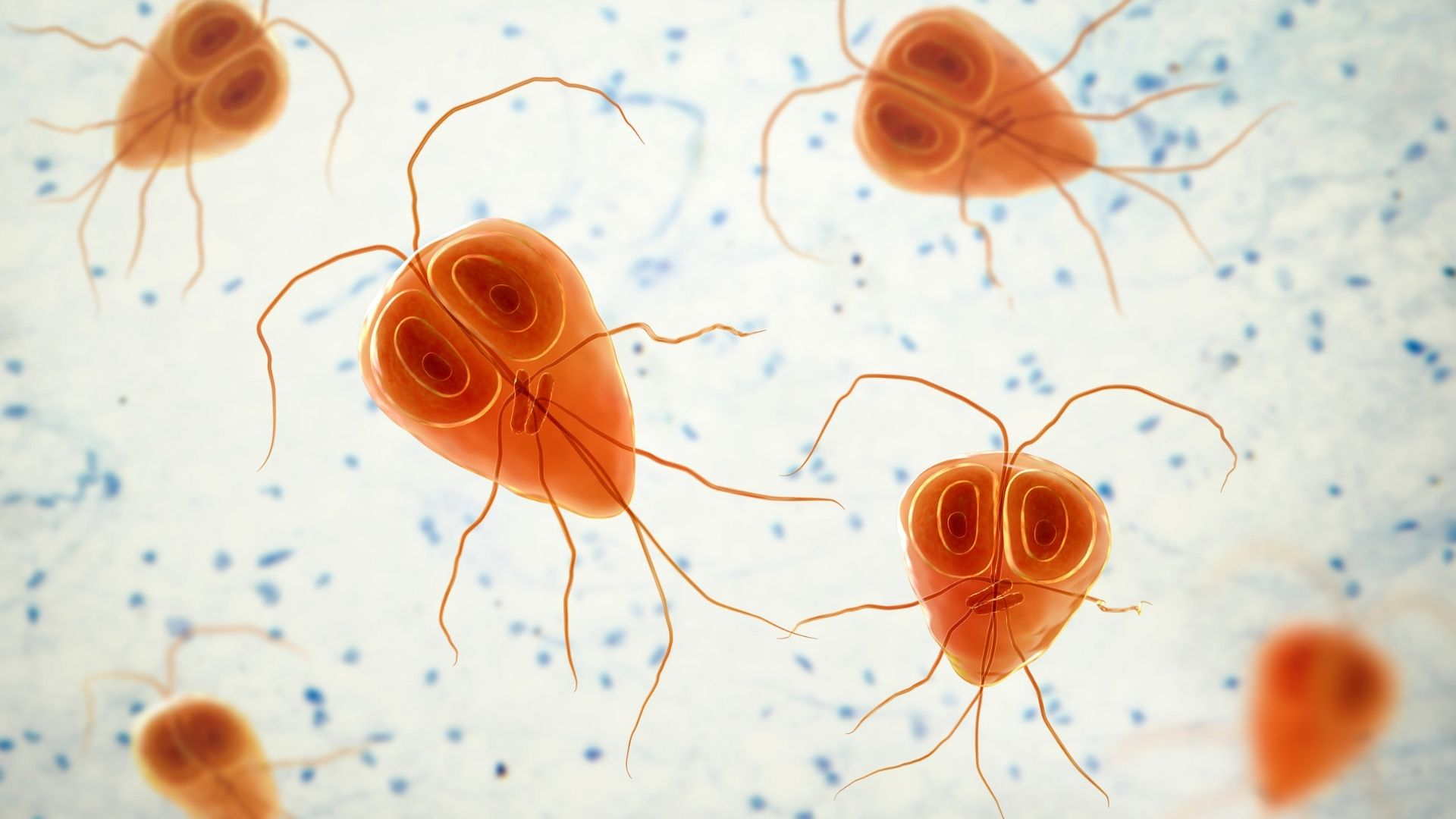
Protozoa are single celled and they multiply inside you, so a very small exposure can become a large infection. Giardia and Cryptosporidium are the common waterborne ones in the United States.
Helminths are worms: roundworms, whipworms, hookworms, tapeworms, pinworms. Adults generally do not multiply inside you, so how sick you get tracks how many you took in.
Ectoparasites like lice, mites, and ticks live on skin and matter mostly for what they transmit, not for the gut.
The scale is large and it is uneven. Roughly a quarter of the world’s population carries soil transmitted worms, concentrated almost entirely where sanitation infrastructure is thin. Look at who’s inside that number, though, and the nutritional story writes itself.
Who carries the global worm burden
People living in areas where soil transmitted helminths circulate, by group, in millions
Exact published estimates, scaled against the largest group. Source: World Health Organization, soil transmitted helminth infections fact sheet.
In the United States the picture is different but not empty. Pinworm is the most common worm infection here, mostly in school age children, and an estimated 1.1 million new Toxoplasma infections occur each year.
What the United States mostly does not have is the heavy, chronic, nutrition wrecking worm burden that the cleanse industry borrows its imagery from.
Part Two
From egg to adult to waste
People picture one thing: a worm in the intestine. But a parasite is a life cycle, and each stage does something different to you. This is the part that makes everything after it make sense.
Stage one
The egg or cyst
The transmission stage, built to survive outside a body. Pinworm eggs become infectious within two to three hours of being laid and stay viable on bedding, towels, and doorknobs for two to three weeks.
Toxoplasma oocysts in cat feces become infectious one to five days after being shed. Eggs do not make you sick where they sit. They make you sick when they are swallowed, and their durability is why reinfection runs through households and classrooms so easily.
Stage two
Larvae on the move
Many species do not stay put. Hookworm larvae penetrate skin, travel through the bloodstream to the lungs, get coughed up and swallowed, then settle in the small intestine.
Ascaris takes a similar tour. This migration is why some infections open with a cough or a rash rather than a stomach complaint, and why the early symptoms get attributed to something else entirely.
Stage three
The adult, feeding
Here is the mechanical damage. Hookworms attach to the intestinal wall and feed, and in heavy infections daily blood loss can reach around nine millilitres, day after day.
That is the direct route to iron deficiency anemia. Giardia does something subtler and arguably worse: it blunts the microvilli, the absorptive fringe of the intestinal lining, cutting surface area and stripping out the brush border enzymes that break down sugars.
Stage four
Waste and byproducts
A feeding organism excretes. Parasite metabolic waste and secreted proteins are immunologically active, and the body answers with inflammation, mucus, and altered fluid handling.
In giardiasis that shows up as impaired glucose, sodium, and water absorption alongside chloride hypersecretion, which is the mechanism behind watery diarrhea. The inflammation is not incidental. It is a large part of why people feel unwell.
Stage five
New eggs, and the loop closes
A single female hookworm can produce up to 30,000 eggs a day. Female pinworms crawl out at night to lay around the anus, which causes the itching, which puts eggs on fingers, which puts eggs back in mouths.
This is exactly why pinworm treatment needs a second dose two weeks after the first, timed to catch worms that were still eggs when the first dose landed, and why everyone in the household is treated at once.
Compiled from CDC parasite pages and StatPearls clinical summaries. Timings and counts are published ranges for typical infections, not guarantees for any individual case.
That five stage view explains something the marketing never addresses. A protocol that kills adult worms and ignores eggs in the environment fails.
A protocol that runs a week and stops before the next generation matures fails. And a protocol built with no idea which organism is present is guessing at every one of those variables at once.
Part Three
Where your nutrition actually goes
If parasites have one defining effect, it is that they reduce the nutritional value you gain from the food you eat. There are four mechanisms involved, which vary depending on the organism.
Four routes to the same problem
- Direct loss
- Hookworms drink blood, and blood is iron and protein. Chronic intestinal blood loss produces iron deficiency anemia, most severely in adolescent girls and women of reproductive age who are already spending iron monthly.
Protein leaks out too, and heavy infections can produce low blood albumin and visible swelling. - Reduced absorptive surface
- The Giardia mechanism, and the one most relevant in high sanitation countries. Blunted microvilli mean less real estate for absorption, and lost brush border enzymes mean food arrives at the gut wall in a form the body cannot take up.
Post infectious lactose intolerance appears in somewhere between 5 and 40 percent of infected people and can persist up to a month after the parasite is gone, which is often mistaken for a brand new food sensitivity. - Fat and the vitamins that ride with it
- When fat absorption fails, everything fat soluble fails with it: vitamins A, D, E, and K. Vitamin A deficiency showing up as poor night vision is a documented consequence of giardiasis, alongside iron, zinc, and B vitamin deficiencies. B12 malabsorption in giardiasis has been documented since the 1970s.
- Inflammation and appetite
- Chronic low grade inflammation raises metabolic demand while suppressing appetite. You need more and eat less. In children this compounds into stunting and underweight, and the numbers are stark: one Malaysian study of infected children found 56.5 percent underweight and 61.3 percent with growth retardation.
The uncomfortable part is that this runs in both directions. Zinc deficiency measurably impairs the immune response against parasitic nematodes at both the intestinal and systemic level, and vitamin A deficiency does something similar. So deficiency makes you a softer target, and infection deepens the deficiency.
That loop is the single most defensible nutritional claim in this entire subject. A well nourished body is not only recovering faster after an infection, it is harder to establish an infection in to begin with. It is a quieter claim than the internet is making, and it is worth more than any cleanse.
Part Four
What food can and cannot do
This is the section people came for, and the one most likely to be oversold. There is real human research on a couple of traditional antiparasitic foods. It is also thin, small, and mostly done where infection rates are high.
How strong is the human evidence
An Easy Eats editorial rating on a five point scale, judged on whether human trials exist, how large they were, and whether outcomes were confirmed by laboratory testing rather than self report
Ratings are our editorial reading of the published human evidence as of August 2026, not a measured quantity, and not our opinion of the foods themselves. We eat pumpkin seeds and garlic constantly. We just do not sell them as a cure.
So split the job in two. Job one is not getting infected. Job two is being the kind of body that handles an infection well and recovers fast. Food is genuinely powerful at both, and neither one requires a cleanse.
Prevention
Meat and fish cooked properly
Whole cuts to 145°F with a three minute rest, ground meat to 160°F, poultry to 165°F.
The single most effective food step against foodborne parasites, and it costs nothing.Prevention
Produce rinsed under running water
Rinse everything, including what you will peel. Skip untreated water and unpasteurized milk.
Most exposure in high sanitation countries arrives through water and raw produce.Resilience
Plant iron with vitamin C
Lentils, beans, and dark leafy greens eaten alongside citrus, bell pepper, or tomato.
Vitamin C substantially improves plant iron absorption, which matters most once reserves are drawn down.Resilience
Zinc and vitamin A sources
Pumpkin seeds, chickpeas, eggs, and beef for zinc. Sweet potato, carrot, mango, and greens for vitamin A.
Both are directly tied to the immune response against intestinal parasites.Recovery
Fermented foods most days
Yogurt, kefir, kimchi, sauerkraut, miso. Build them up gradually rather than all at once.
The randomized evidence here is for diversity and lower inflammation, which is what a recovering gut needs.Recovery
A wide range of plant fiber
Variety beats volume. Oats, beans, berries, seeds, and a rotating cast of vegetables.
Different fibers feed different microbes, and that rebuilds an ecosystem faster than any supplement.Part Five
How often should you cleanse
The common answer is every three to six months, or seasonally, or with the full moon. We want to be direct: there is no evidence based schedule for routine parasite cleansing in a healthy person, because there is no evidence that routine parasite cleansing does anything.
One infectious disease physician put the logic plainly in a 2026 NPR report: if a protocol needs repeating every six months, that is a hint it is not accomplishing much. Dr. Peter Hotez made the structural point alongside it, that no single treatment can address hundreds of distinct organisms, the same way no single pill treats all viruses.
Here is the schedule that is supported.
Indication one
You tested positive
A clinician orders a stool ova and parasite test, a stool antigen test, or bloodwork, identifies the organism, and prescribes a medication matched to it. Then a follow up test confirms clearance. This is the entire evidence based pathway, and it is faster and cheaper than most cleanse kits.
Indication two
Pinworm, on the pinworm schedule
Treatment, then a second dose two weeks later to catch the next generation, with the whole household treated at the same time and bedding and towels washed hot. The schedule is dictated by the life cycle, not by a season.
Indication three
Mass drug administration, in endemic regions
The World Health Organization recommends periodic deworming with albendazole or mebendazole for at risk populations where soil transmitted helminths are common, without individual diagnosis, typically once or twice a year. This is a public health strategy for high prevalence settings. It is not a template for someone in Florida with bloating.
Indication four
A specific high risk exposure
Travel to a high prevalence area followed by symptoms, a known contaminated water exposure, or a household contact who tested positive. The response is a test, not a guess.
Compiled from World Health Organization deworming guidance and CDC treatment pages. Diagnosis and prescribing are clinical decisions and this list is not one.
About the photographs
A recurring feature of cleanse culture is people photographing what they pass and identifying it as parasites
Physicians are consistent on this. What people are seeing is nearly always mucus casts, undigested fiber, or shed intestinal lining, all of which a harsh laxative protocol reliably produces. Rope worms in particular have no accepted status as an organism.
The point is not that people are foolish. The point is that a cleanse manufactures its own evidence, and that loop is the engine of the entire category.
If you do it anyway
Test first, not after
A test costs less than most cleanse kits and tells you something true. If it comes back negative, your symptoms have another cause worth finding, and that is a useful result rather than a disappointing one.
If you do it anyway
Rule out the serious things
Bloating, fatigue, and blood in stool are also how inflammatory bowel disease, celiac disease, thyroid conditions, and colorectal cancer present. Attributing them to parasites and self treating is how a dangerous delay happens.
If you do it anyway
Some people should not, at all
Not while pregnant or breastfeeding, since wormwood is contraindicated in pregnancy. Not with a child, because dosing is not something to improvise. Not if you are immunocompromised or on medication, because herbal blends interact with anticoagulants and seizure medications, and unregulated products carry unpredictable actual doses.
If you do it anyway
Treat diarrhea as a cost, not a result
Most protocols work by producing loose stools, which means fluid loss, electrolyte disruption, and nutrient loss. Feeling emptied out is not the same as being cleaned out. Stop at severe cramping, vomiting, dizziness, dark urine, or any yellowing of skin or eyes, and call someone.
If you do it anyway
Never use veterinary antiparasitics
Animal formulations of ivermectin and fenbendazole circulate in these communities. The doses are wrong, the formulations are wrong, and documented outcomes have included serious harm.
Part Six
After: rebuilding the terrain
Whether you cleared a confirmed infection with prescription medication or simply put your body through a rough two weeks, the aftermath is the same problem: a lining that needs to regenerate, a microbial community that has been disrupted, and enzyme systems that need time. This is where food genuinely earns its place. Not as a weapon, as a rebuild.
Days 1 to 7
Rehydrate and go gentle
Fluids and electrolytes first, especially after any diarrhea. Eat simply and warmly: soups, broths, well cooked rice and vegetables, eggs, soft fruit. Go easy on dairy for now, because post infectious lactase deficiency is common and can linger up to a month. That is a temporary problem, not a permanent one.
Weeks 2 to 4
Reseed and refeed
Bring in fermented foods daily and build them up gradually. Then widen the plant fiber range steadily rather than all at once, since a recovering gut handles gradual increases far better. Rebuild iron and zinc deliberately if the infection involved blood loss, and pair plant iron with vitamin C every single time.
Weeks 5 to 8
Retest and reassess
If you were treated for a confirmed infection, this is when a follow up test confirms clearance. Reintroduce dairy and higher fiber foods and notice what your body says. Recheck iron and B12 if you were deficient, because correcting stores takes considerably longer than clearing the organism.
Beyond
When symptoms outlast the parasite
Roughly one in ten people who have a gut infection go on to develop post infectious irritable bowel syndrome, and Giardia is a recognized trigger. Symptoms can persist for years, though about half of cases resolve on their own within six to eight years. If you still feel unwell long after a documented infection cleared, that is a real, named, manageable condition. It is not a sign the parasite is still winning, and it is not a reason to cleanse again.
Staged from published recovery guidance including Cleveland Clinic post infectious IBS material and giardiasis malabsorption literature. Individual recovery varies with the organism, the severity, and your starting nutrition.
Part Seven
The good, the bad, and the ugly
Our relationship with these organisms is older than agriculture and more complicated than either side of the argument admits.
The good
They may have helped build our immune system
Humans and helminths co evolved for a very long time, and the hygiene hypothesis proposes that removing them abruptly left our immune systems miscalibrated.
Researchers have run genuine clinical trials using controlled helminth exposure for Crohn’s disease and multiple sclerosis. Results were mixed and nothing has been approved, but the underlying immunology is real and actively studied.
The bad
The burden is enormous and deeply unfair
A quarter of humanity carries soil transmitted worms, and the cost lands hardest on children whose growth and cognition are being shaped right now, and on pregnant women whose iron reserves are already stretched.
It is not exotic and it is not distant. It exists inside wealthy countries too, in the communities with the least access to plumbing, healthcare, and testing.
The ugly
The fear is more profitable than the cure
Real deworming medication is cheap, effective, and distributed by the hundreds of millions of doses. Cleanse kits are expensive, unregulated, sold on a recurring schedule, and unsupported by evidence.
The ugliest part is the misdirection, where someone with an undiagnosed serious condition spends months on protocols while the real problem goes unexamined.
Part Eight
About what this can and cannot do
Worth saying plainly
We could have written you a much more exciting article
There is a version of this post that performs better. It opens with a symptom checklist broad enough to include everyone, shows you an alarming photograph, gives you a fourteen day protocol, and ends with a product link.
We know exactly how to write it.
The evidence here is uneven, and we would rather say so than smooth it over. The parasite biology is well established. The nutrient absorption mechanisms are well established.
The food evidence is a mix of one strong recovery trial, two small studies in high prevalence settings, and a great deal of laboratory work that has never been tested in people. The cleanse evidence is essentially absent, and the safety concerns around wormwood and unregulated dosing are real.
Nothing here is a diagnosis or a treatment plan. Parasitic infections are identified by testing and treated with prescription medication matched to the organism, and if you think you have one, a clinician is the first call rather than a supplement.
What we can tell you without hesitation is that a well nourished body absorbs more, resists better, and recovers faster, and that is true whether or not a parasite is ever part of your story.
Food is the first medicine.
Nourish your gutSources
- World Health Organization · Soil transmitted helminth infections
- Centers for Disease Control and Prevention · About pinworm infection
- Centers for Disease Control and Prevention · Preventing toxoplasmosis
- PLOS Neglected Tropical Diseases · Neglected parasitic infections and poverty in the United States
- StatPearls, NCBI · Hookworm
- IntechOpen · Malabsorption in giardiasis
- Acta Tropica · Pumpkin seeds with areca nut extract in community based treatment of human taeniasis
- Journal of Medicinal Food · Dried Carica papaya seeds against human intestinal parasitosis, a pilot study
- Cleveland Clinic · Parasite cleanse, is it safe
- NPR, March 2026 · Doctors warn against parasite cleanses made popular by wellness influencers
- Cell, via Stanford Medicine · Fermented food diet increases microbiome diversity, lowers inflammation
- Cleveland Clinic · Post infectious irritable bowel syndrome
- The Journal of Nutrition · Zinc deficiency impairs immune responses against parasitic nematode infections
- BioEssays, 2024 · Health promoting worms, prospects and pitfalls of helminth therapy